
Home – The ‘Is It Time for a Rebrand?’ Checklist for Growing Founders
This post walks growing founders through a practical checklist to decide whether they need a brand refresh or a full rebrand as their business, audience, and offers evolve beyond their original DIY identity. It explains how to spot brand friction, assess strategic and audience alignment, score whether to delay, refresh, or fully rebrand, and understand the difference between a light visual glow-up and a complete repositioning. It closes with an action-focused roadmap and FAQs so founders can move from hesitation and outdated visuals to a confident, story-driven brand that matches the caliber of their current work.
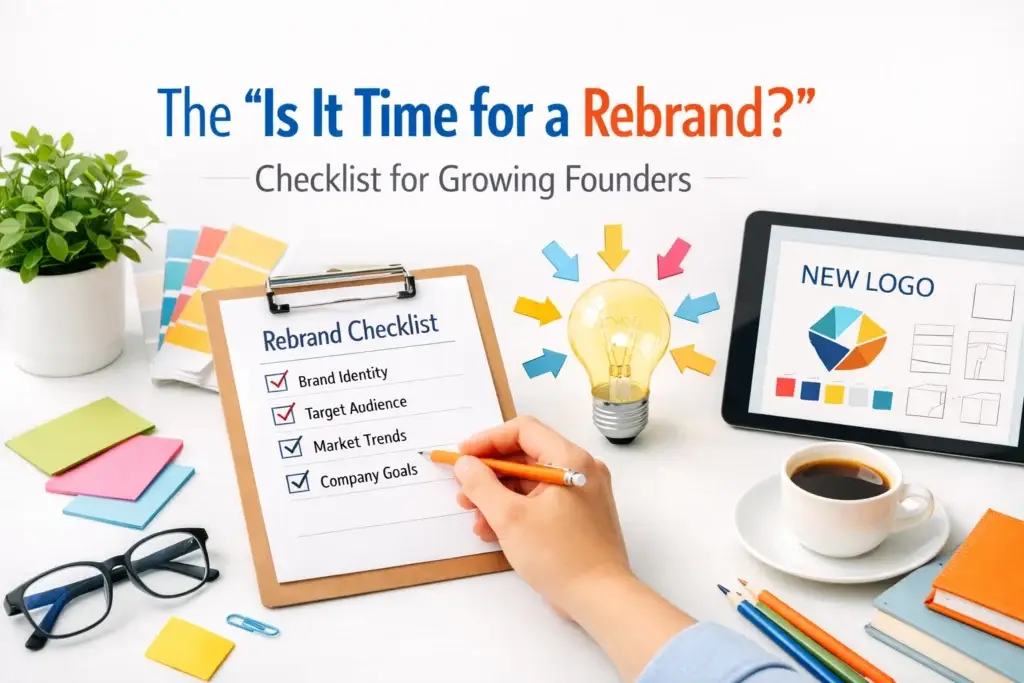
You remember the early days. You were a visionary with a laptop, a caffeine habit, and a dream. You likely DIY-ed your first logo, picked a color palette that “felt right” in the moment, and built your website during a weekend sprint. It worked. It got you off the ground, secured your first clients, and established your presence.
But here is the truth about growth: what got you here won’t get you there.
As we move through 2026, the digital landscape has shifted. Audiences are more discerning, AI-driven branding is raising the bar for personalization, and “good enough” is starting to feel like a heavy anchor. You’ve evolved. Your services have matured. Your clients are higher-ticket. Yet, when you look at your visual identity, you still see that scrappy startup from three years ago.
If you feel a sense of hesitation before sending a prospect to your website, you aren’t just “overthinking” it. You’re experiencing brand friction. This guide is your permission slip to stop settling for a “blank frame” and start building a brand that matches your current stature.
In the beginning, you likely cast a wide net. You wanted anyone who would pay. Now, you’ve found your niche. You’re targeting sophisticated, high-value clients who expect a premium experience.
If your brand still speaks the language of “budget-friendly” or “generalist,” you are actively pushing away the very people you want to attract. High-ticket clients look for cues of stability, authority, and shared values.

Did you start as a freelancer and grow into an agency? Did you pivot from coaching to a SaaS model? If your business model has fundamentally changed in the last 12-18 months, your brand promise is likely outdated.
When your offerings evolve, your messaging must follow. Without a clear brand messaging framework, you risk confusing your market, leading to longer sales cycles and missed opportunities.
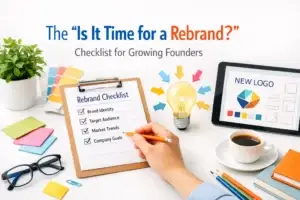
Use this rebrand checklist to evaluate your current standing. Be honest with yourself: honesty is the first step toward a transformative glow-up.
Not every growing pain requires a full rebrand. Sometimes, a “refresh” is all you need to polish the edges. Use this scoring framework to determine your next move:
Understanding the difference can save you thousands of dollars and months of time.
A Refresh is like a high-end home renovation. You keep the foundation and the structure, but you replace the floors, paint the walls, and upgrade the fixtures. It feels new, modern, and exciting, but your name and core identity remain the same. This is perfect for founders who still love their brand name but hate their 2022 aesthetics. You can learn more about rebranding without rebuilding to see if this is your path.
A Rebrand is like moving into a custom-built estate. You might change the name, the core messaging, the visual identity, and the target audience entirely. This is a strategic pivot designed to signal a “new era” to the market.

In 2026, people don’t buy products; they buy into identities and stories. A successful rebrand isn’t just about a prettier logo; it’s about the power of storytelling.
Align your personal journey as a founder with the transformation you provide for your clients. When you weave your “why” into your visual identity, you create an emotional spark that DIY brands simply cannot replicate.
Once you’ve realized a change is necessary, the “how” matters as much as the “why.” Simplify the process by breaking it down into phases. Start with your strategy: who are you now?: then move into your visuals, and finally, your digital rollout.
If you find yourself staring at a blank frame, remember that you don’t have to do this alone. Moving from DIY to professionally designed is a rite of passage for every successful founder. Knowing when to look for a branding agency is a sign of leadership, not a sign of weakness.
Ready to take the leap? Follow these steps to begin your transformation:
Q: Will I lose my current SEO ranking if I rebrand?
A: Not if you do it right. A strategic rebrand includes a technical SEO migration plan. Optimizing your website for SEO during a redesign can actually improve your rankings by cleaning up old code and improving user experience.
Q: How long does a full rebrand take?
A: Typically, a strategic rebrand takes 3 to 6 months. This allows for deep strategy work before any design begins. Remember: speed is the enemy of depth.
Q: Can I keep my logo but change my colors?
A: Absolutely. This is a classic “Refresh.” It’s a great way to modernize your look while keeping the brand equity you’ve built in your logo.
Your brand is a living breathing ecosystem. It needs to be nurtured to survive. Are you ready to stop hiding behind an outdated identity and step into the brand you were always meant to lead?
The glow-up is waiting. Let’s build something visionary.



2 Responses
Such an important reminder that your business evolves, and your brand should, too! I especially appreciate the point about how your visual identity might feel outdated as your services become more high-end. It’s easy to forget how much your branding needs to keep up with your business.
This checklist really resonated with me as a founder who’s been wearing multiple hats for years—especially the part about recognizing brand friction before it impacts client perception. It’s easy to get stuck in ‘good enough’ mode, but your breakdown of when to refresh vs. rebrand helped clarify what my business actually needs right now. Thanks for the practical framework that doesn’t just talk the talk, but shows how to walk the walk.